A Family Guide to Hindu Life and Indian Communities in Japan
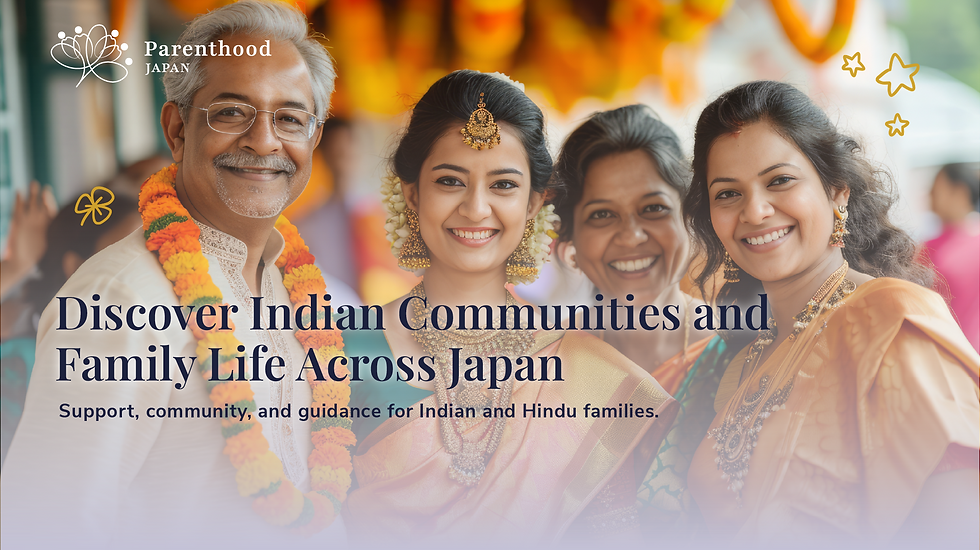
Japan and India share a deeper connection than most people realise. Hindu deities have been woven into Japanese religious culture for over a thousand years, and several gods still worshipped in Japan today trace their origins directly to Hinduism. Saraswati, known in Japan as Benzaiten, is one of the most widely revered deities in the country. Ganesha is worshipped for good fortune. Lakshmi appears in the Japanese tradition as Kichijoten. When you arrive in Japan as a Hindu family, you are not arriving somewhere foreign to your traditions. You are arriving somewhere that has held a piece of them for centuries.
That said, building daily Hindu family life in Japan, finding vegetarian food, locating a mandir, celebrating Diwali and Holi, enrolling your children in school, and staying connected to your roots takes practical knowledge. This guide gives you that knowledge. It covers the whole country, not just Tokyo, and it is written for families who are living here, not passing through.
The infrastructure for Indian and Hindu life in Japan, particularly in major cities, is more substantial than many families expect before they arrive.
Hindu Temples & Spiritual Centres Across Japan
Japan has a small but meaningful number of dedicated Hindu temples and spiritual centres, concentrated primarily in Tokyo with growing presence in other cities. What makes the spiritual landscape here particularly interesting for Hindu families is the historic overlap between Hindu and Buddhist traditions in Japan, which means that many Japanese temples contain deities and iconography that will feel familiar even if the context is different.
Tokyo
BAPS Shri Swaminarayan Mandir in Tokyo

one of the most significant Hindu temples in Japan and serves the Swaminarayan community as well as the broader Hindu population across the city. It follows traditional practices and provides a space for daily prayer, festivals, and community gatherings that keeps families spiritually connected to home. For families from Gujarat or those who practice within the Swaminarayan tradition, this is a natural first home in Tokyo.
Shirdi Sai Baba Temple in Ikebukuro

draws devotees from across the Indian community regardless of regional background, as Sai Baba's following transcends denominational lines. It is one of the more accessible temples in Tokyo in terms of location and visiting hours and is well known within the Indian expat community.
ISKCON New Gaya in Tokyo

affiliated with the International Society for Krishna Consciousness is dedicated to Lord Krishna and follows Gaudiya Vaishnavite traditions. The temple features daily kirtans, Bhagavad Gita discussions, and prasadam distribution, and Janmashtami here is one of the most joyful community celebrations of the year for Indian families across the Kanto region.
Shiva Shakti Mandir and Ashram in Shinjuku offers prayer, spiritual guidance, and community programmes, and the temple features traditional South Indian architectural elements including intricate carvings and sacred idols. It celebrates Diwali, Navratri, and other major Hindu festivals with the community.
The Hindu Temples Association Japan, which has an active Facebook page, consolidates information on upcoming temple events and projects across the country and is worth following for any family wanting to stay connected to the wider Hindu community.
Osaka
ISKCON Osaka Center serves the Hare Krishna community
and broader Hindu families across the Kansai region. Like its Tokyo counterpart, it is a centre for kirtan, study of Hindu scriptures, communal meals, and celebration of major Vaishnava festivals. For Hindu families based in Osaka, Kyoto, Kobe, or surrounding areas, the ISKCON Osaka Center is often the closest dedicated spiritual home.
Kanagawa
The Vedanta Society of Japan in Kanagawa provides a spiritual home grounded in the teachings of Sri Ramakrishna and Swami Vivekananda. It serves both Indian families and Japanese devotees interested in Vedantic philosophy, and hosts regular programmes, lectures, and meditation sessions. For families in Kanagawa, Yokohama, or southern Tokyo, this is an important and welcoming centre.
The Hindu connection within Japanese temples
One of the most extraordinary things about being a Hindu family in Japan is discovering how many familiar deities are present in mainstream Japanese religious life. Visiting the Benzaiten shrine at Inokashira Park in Tokyo, you are in the presence of Saraswati. Bishamon-do Temple in Yamashina Ward, Kyoto, is dedicated to a deity who corresponds to Lord Kubera and is actually a popular destination for Indian families living in and around Kyoto. Ganesha, known locally as Kangiten, is prayed for health and good fortune.
These threads of shared spiritual heritage make Japan feel less distant than it might otherwise seem, and exploring them together as a family can become one of the most meaningful parts of life here.

Join Our Community
As we navigate the beautiful journey of parenthood, it’s essential to connect with others who share our values and experiences. Our community of Hindu families in Japan offers a supportive environment where you can share your joys, challenges, and insights. Together, we celebrate our rich cultural heritage while embracing the unique experiences of raising children in a diverse society.
Comments