Understanding Japanese Family Culture as an International Parent
Updated: Jun 4
Stepping into the world of Japanese parenting as an international mom can feel like navigating a maze of beautiful, unwritten rules. The culture is rich, precise, and sometimes overwhelmingly different from what we know back home. If you've ever felt a moment of hesitation or confusion, trying to decipher a school note or understand a quiet social cue, you are not alone.
Parenthood Japan is here to offer a comforting hand and clear guidance. This article is your essential translator for the unique heart of Japanese family life, helping you feel grounded, confident, and connected as you raise your global family in Japan.
The Intimate Bond: Understanding Amaeru
(甘える)
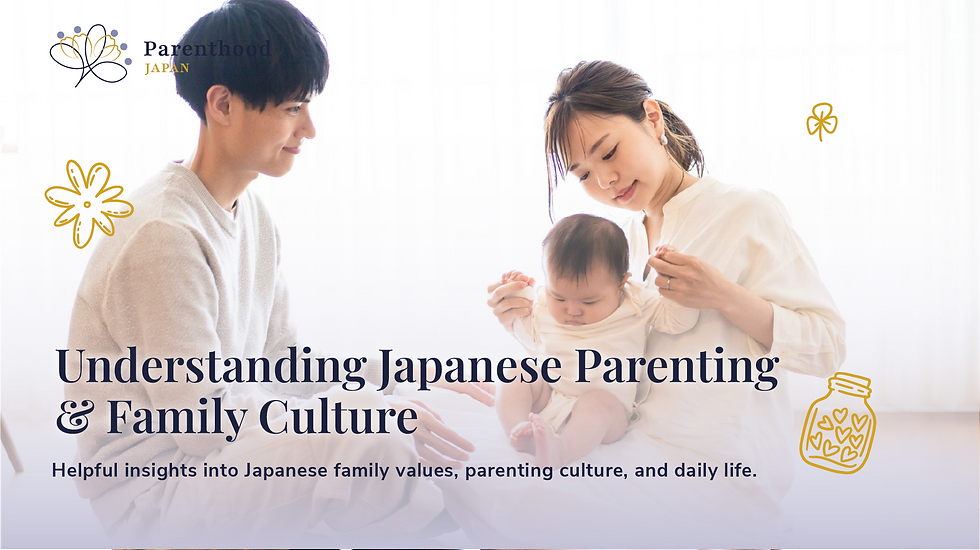
One of the most defining features of Japanese family life is Amaeru (the desire to be nurtured and rely on others without reservation). This concept shapes the intensely close and interdependent relationship between mother and child, especially in the early years. Unlike Western cultures that often push for quick independence, Amaeru celebrates emotional closeness. That is why co-sleeping or carrying children for longer is common in Japan. For expat moms, realizing this shift in focus from individual achievement to emotional security can ease the pressure to rush your child's autonomy. Embrace the safe space Japan provides to nurture this deep bond, knowing that community safety allows for public independence later on.
Community First: The Unspoken Rule of Wa (和)
The principle of Wa (harmony) guides nearly all social interactions here. For parents, this is most evident in the incredible safety and shared responsibility for children. Why can your seven-year-old walk to school alone? Because the concept of Wa means the entire neighborhood is subtly watching and protecting them. In school, this translates to collective duties: children clean their own classrooms and hallways, learning that group needs supersede individual desire. When interacting with the PTA or neighbors, remember that prioritizing smooth, indirect communication and seeking consensus (avoiding conflict) is a sign of respect for Wa. Observing first and participating gently is key to fitting into your local komyuniti (community).
Raising a child between two cultures is one of the most beautiful and complex gifts you can give them. If you want to go deeper on this topic, our post on Raising Multicultural Children in Japan as Foreign Parents shares practical ways to nurture your child's dual identity with confidence and joy.
Navigating the Day-to-Day: School Rhythms and Bento Culture

Japanese family life is all about a thoughtful routine. The school system runs with beautiful precision, from assigned seating charts to structured playtimes. As an international parent, you will quickly meet the bento (packed lunch) culture. It can feel overwhelming to make these detailed, often artistic meals, but see it as a way families show care, not as a judgment on your parenting. If making a full kyaraben (character bento) feels impossible, just focus on fresh, balanced meals that meet the school's basic hygiene requirements. The real key is adapting, not trying to be perfect. On busy days when time is short, embrace eki-ben (train station bento) or konbini (convenience store) meals. Sometimes taking care of yourself means being smart about outsourcing.
The effort you put into understanding these cultural layers is a profound gift to your children, shaping them into truly global citizens. Remember that you are a pioneer, doing the difficult, rewarding work of bridging cultures. The challenges you face are temporary, but the deep, secure connections and the safe, beautiful life you are building here are lasting.
School life is one of the biggest parts of your child's experience in Japan. If you are just getting started, our step-by-step guide to Navigating the Japanese School System walks you through everything you need to know about public school enrollment as a foreign family.
Be patient, be kind to yourself, and never hesitate to reach out to the Parenthood Japan community; your tribe knows exactly where you are. Keep shining, parent!
Join the Parenthood Japan online community for clarity, support, and practical guidance.


Comments